3Article
The full story as it will appear on pupcities.com.
Humans of Pup Cities Bangkok: Kae of The Voice Foundation
She went out to help people during the 2011 floods. She came back with a life's work, and Bangkok's animals have had a voice ever since.
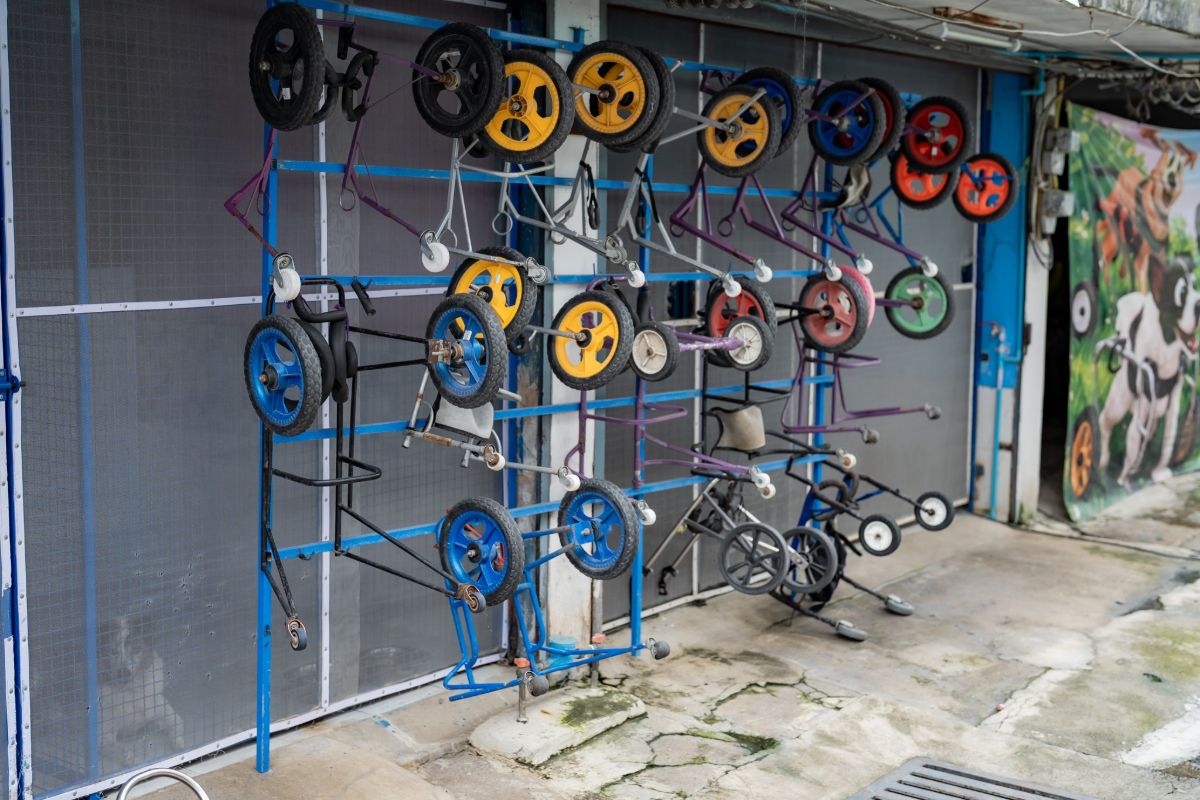
There is a wall at The Voice Foundation where the wheelchairs hang. Dozens of them, in blue and yellow and purple, welded frames with bicycle wheels, hooked on a rack outside the ward like bikes outside a school. Some are for dogs the size of a shoebox. Some are for dogs that would come up to your hip. All of them have been used, and all of them will be used again.
Kae Chollada has been walking past that wall, in one form or another, for fourteen years.
01
Who is going to help them?
Kae is a familiar face in Thailand, a television host and actress with a long career in front of cameras. That is not why she is here. She is here because of what she saw in 2011.
“During the 2011 floods, I originally went out as a volunteer to help people. But while traveling through flooded communities, I began seeing dogs and other animals stranded everywhere — on rooftops, on small patches of dry land, inside abandoned houses, waiting without understanding why their families had disappeared.”
“Some were hungry, injured or terrified. Others were simply waiting.”
“I remember thinking: Who is going to help them?”
The answer, at first, was food. She and the people around her started carrying animal food with them. Then food became rescue. Rescue became medical treatment. One animal became many.
“It made me realize how vulnerable animals are in our cities. They live alongside us and are part of our communities, yet when a crisis happens they can become almost invisible.”
She is clear that this was the turning point, not a gradual drift. “I could no longer see an animal in need and think, ‘someone else will help.’”
“I remember thinking: Who is going to help them?”
02
From one to many
Rescuing animals one at a time was necessary. It was also, she realized quickly, never going to be enough.
“We were seeing abandonment, neglect and cruelty, yet at that time there was very limited legal protection specifically addressing animal welfare. I began to understand that compassion alone was not enough. We needed systems, education, responsibility — and legislation.”
Her question changed. Not how can I save this animal, but how can we create a society that protects animals in the first place.
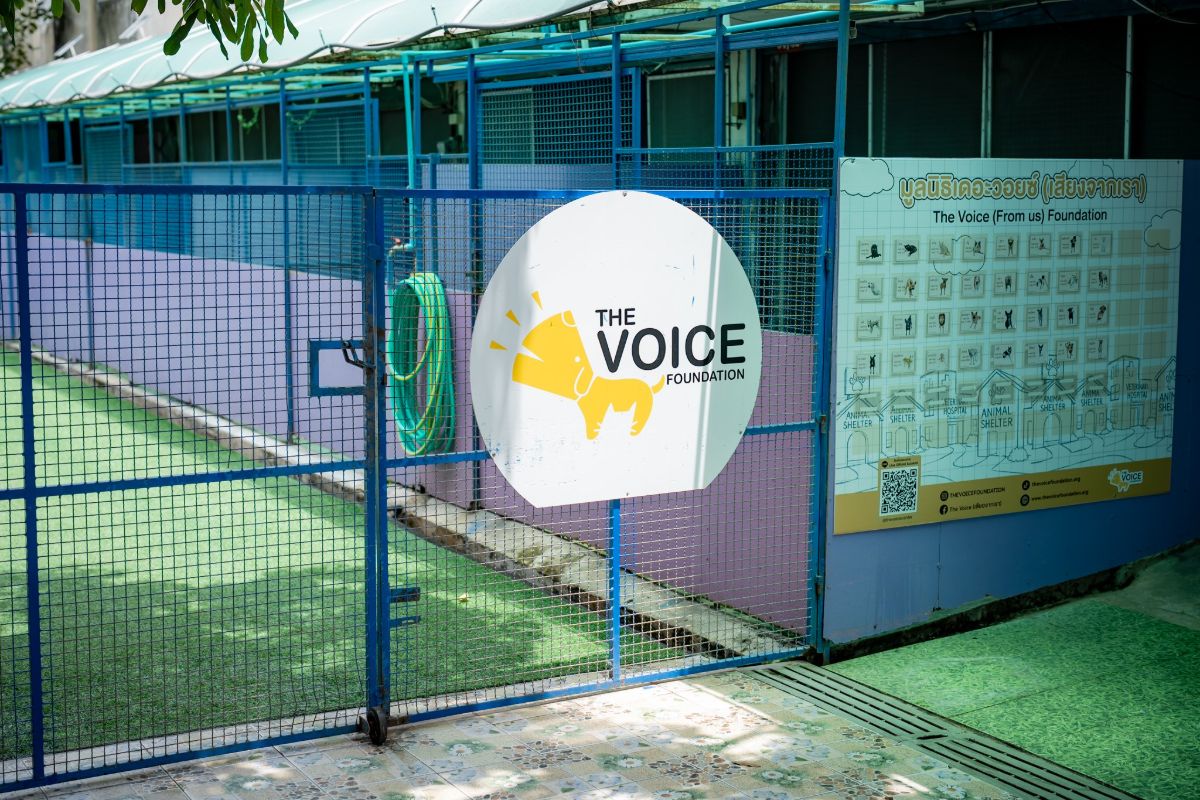
The Voice Foundation began as a project in 2012 and was formally registered the following year. The Thai name is เสียงจากเรา, which translates roughly as “the voice from us.” The idea behind it is simple: animals cannot speak for themselves, so perhaps we can lend them our voices.
“I never intended to simply create another rescue organization. I wanted to build a platform that could connect rescue, rehabilitation, adoption, education and advocacy — and encourage ordinary people to realize that they too can make a difference.”
Did she hesitate? Not about the animals. About the scale of what she was taking on, yes.
“Starting a foundation meant committing not just emotionally but financially, operationally and personally. Once you rescue an animal, you cannot simply walk away when the story becomes difficult or expensive.”
“I couldn’t unsee what I had seen. So there was really no going back.”
“I couldn’t unsee what I had seen. So there was really no going back.”
03
What a thousand looks like
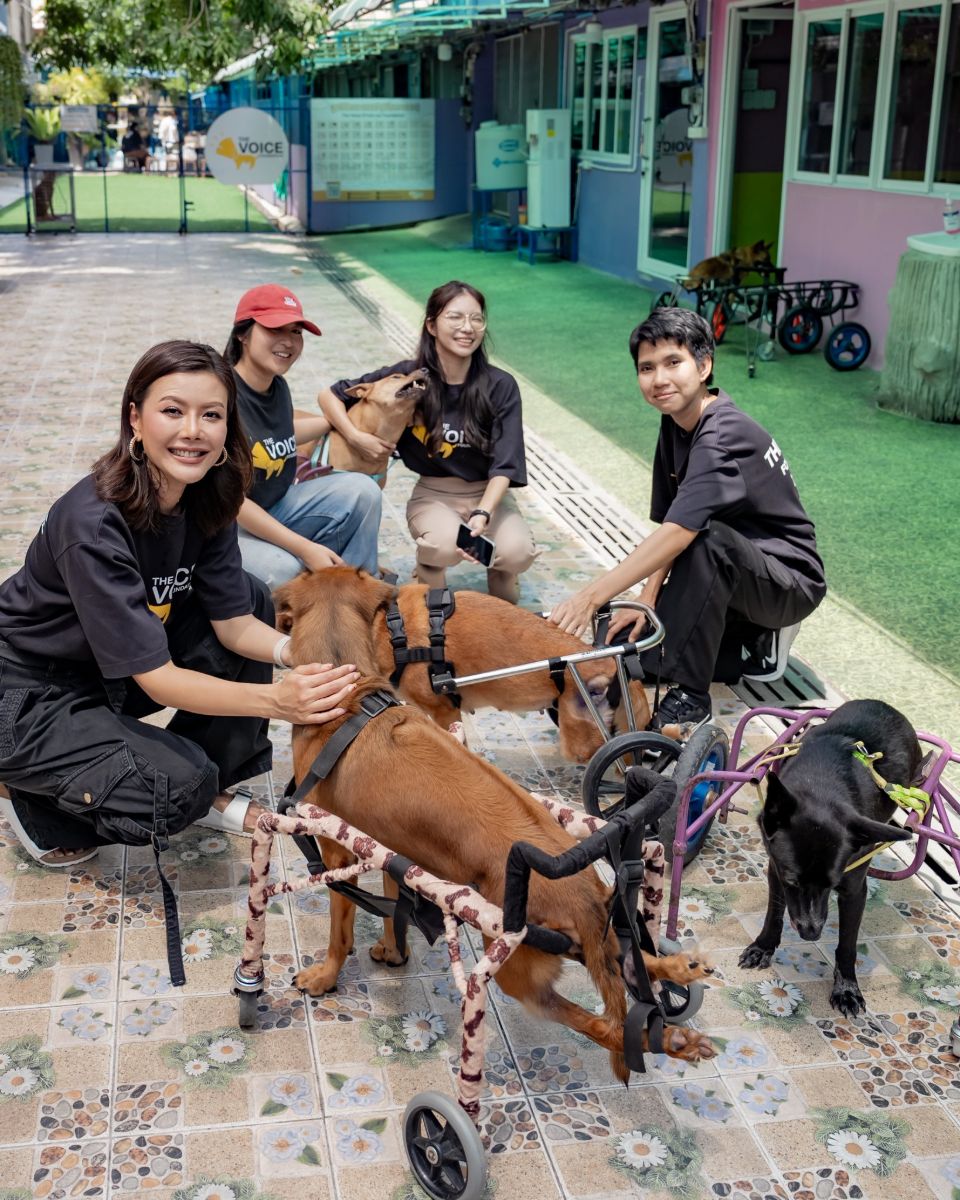
Today The Voice Foundation cares for more than a thousand animals at any given time. Most are dogs, a few hundred are cats, and a large share of them are elderly, disabled, or in need of ongoing medical treatment. These are the animals that no one else took.
That is what the wall of wheelchairs is for.
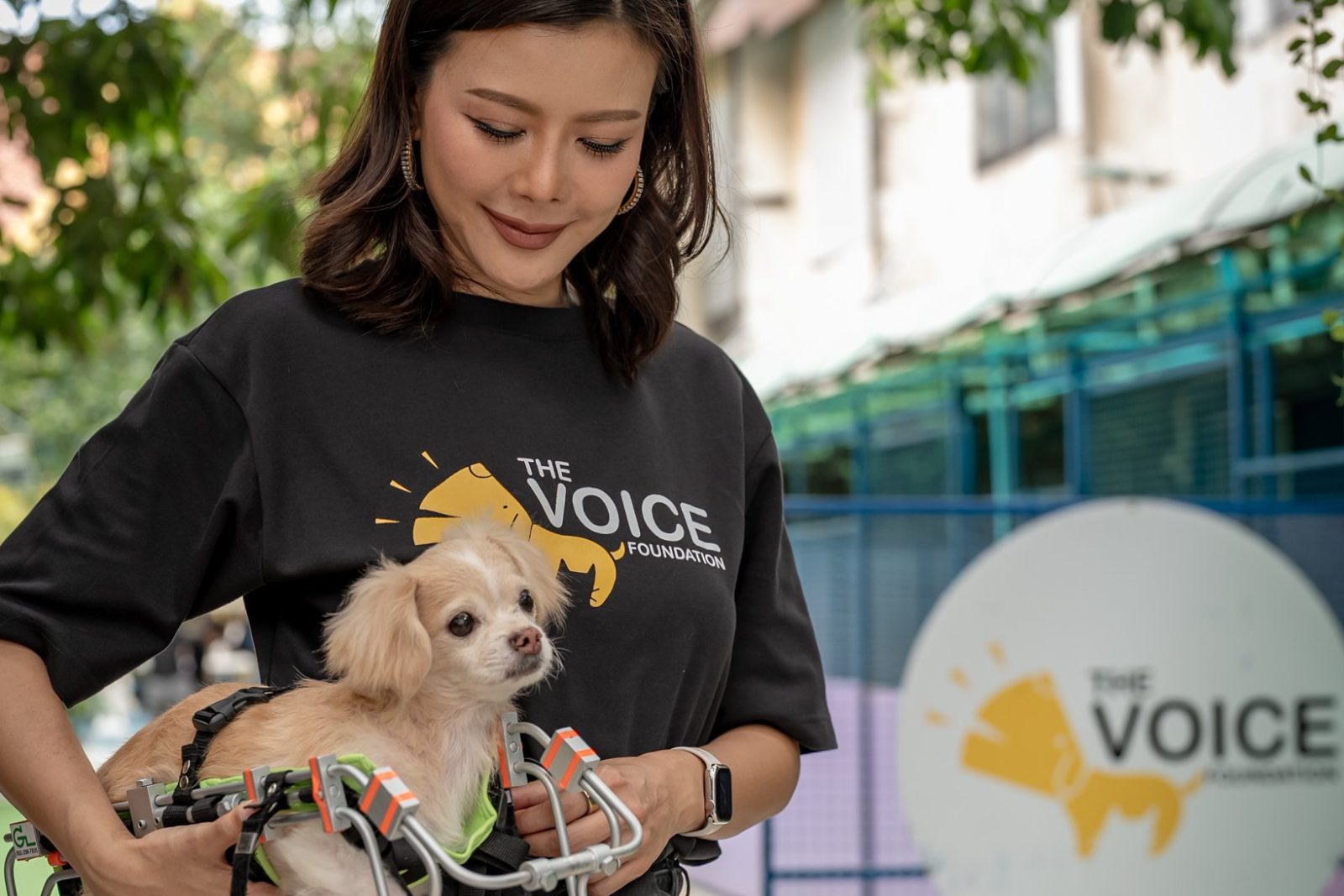
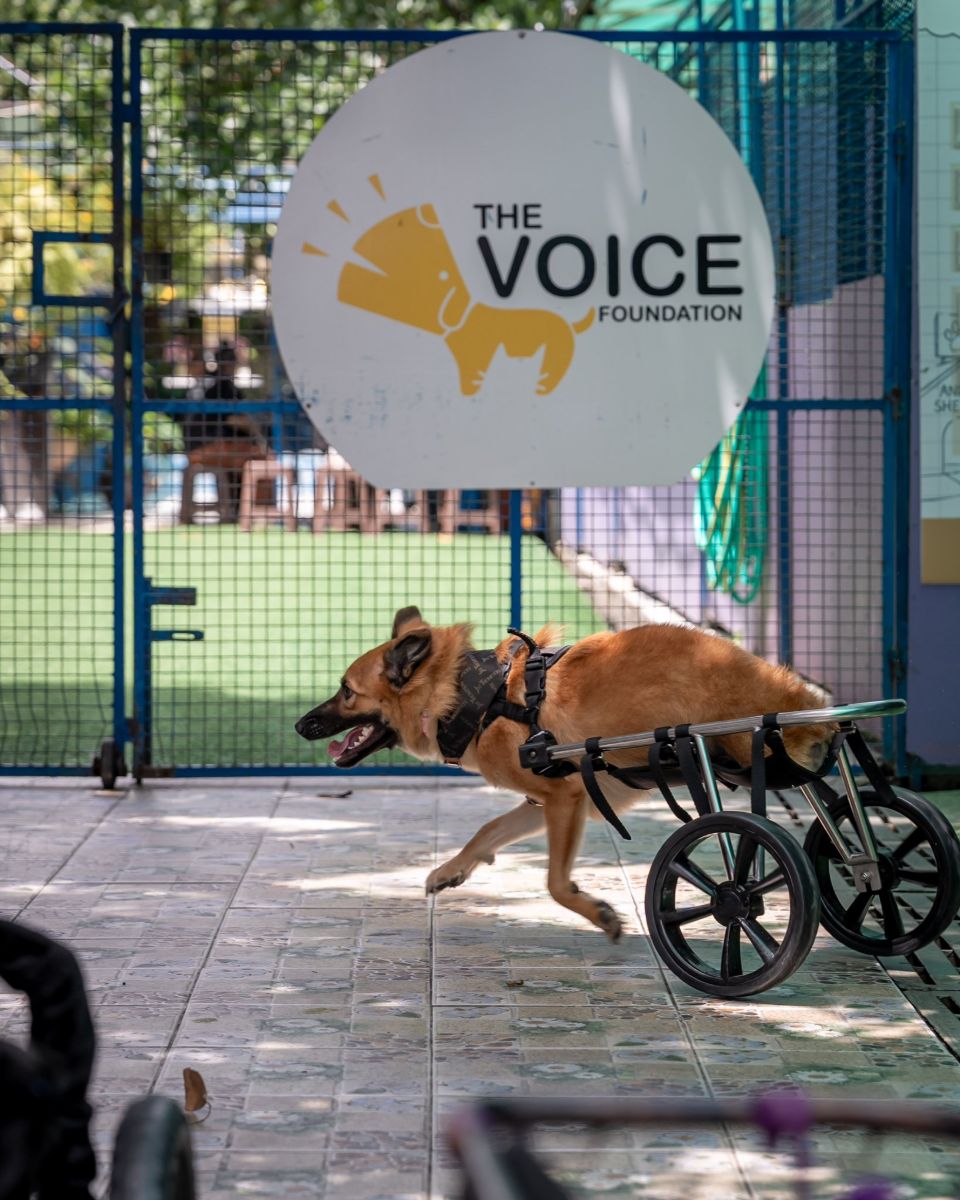
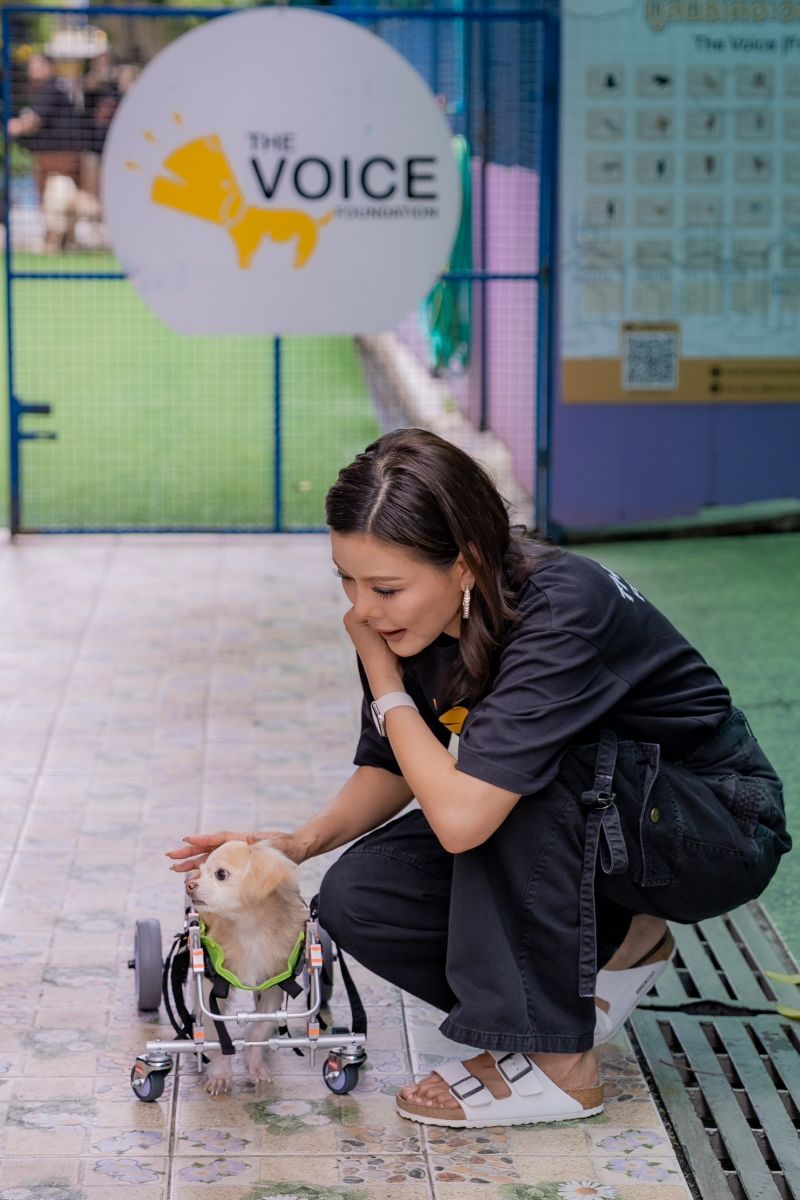
In the courtyard alone, there are three dogs on wheels. A small tan dog in a green harness whose back legs have stopped working. A brown dog in a floral-covered cart, grinning. A larger dog in a stainless steel frame caught mid-sprint, front paws blurred, cart flying behind him. Nobody in frame is looking at him. This is ordinary here.
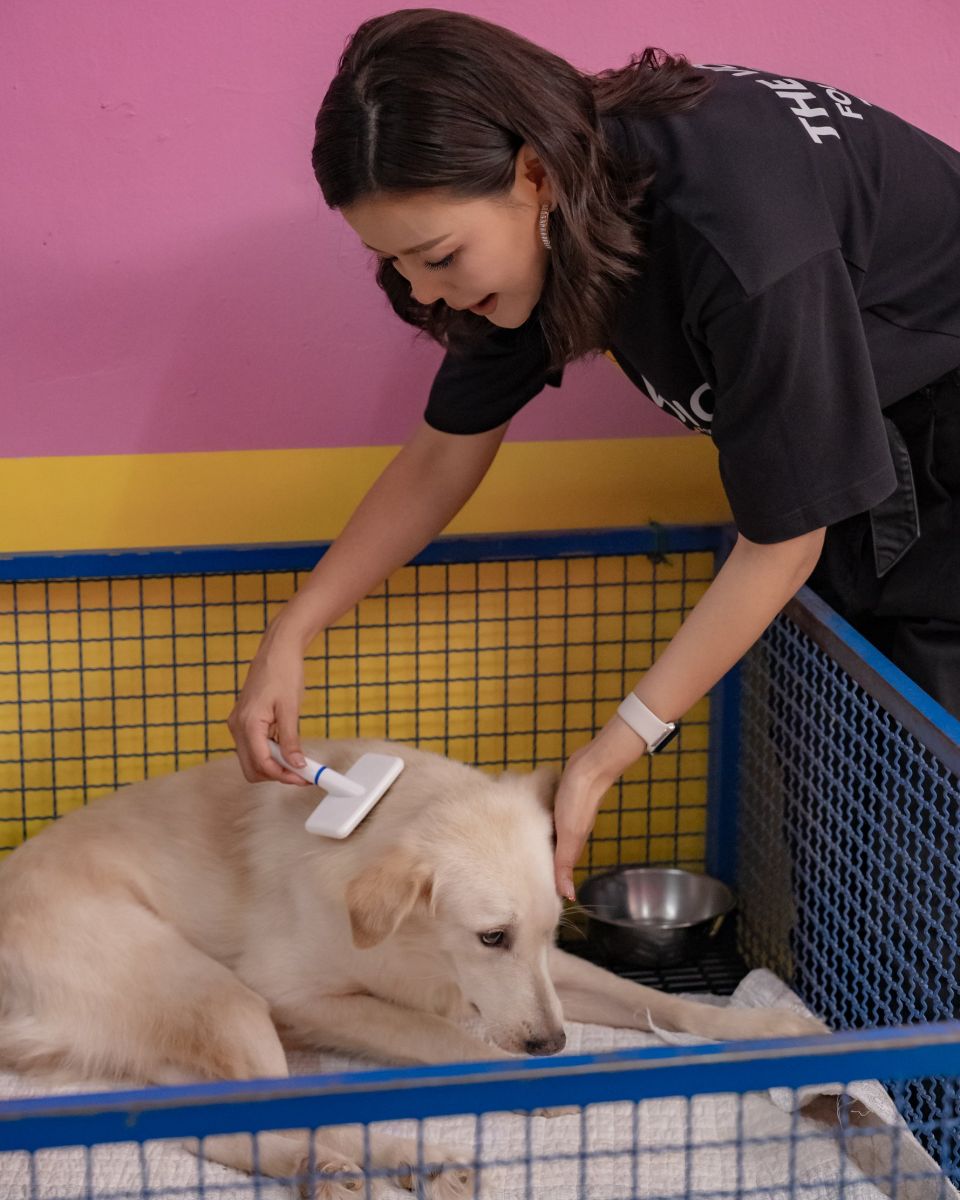
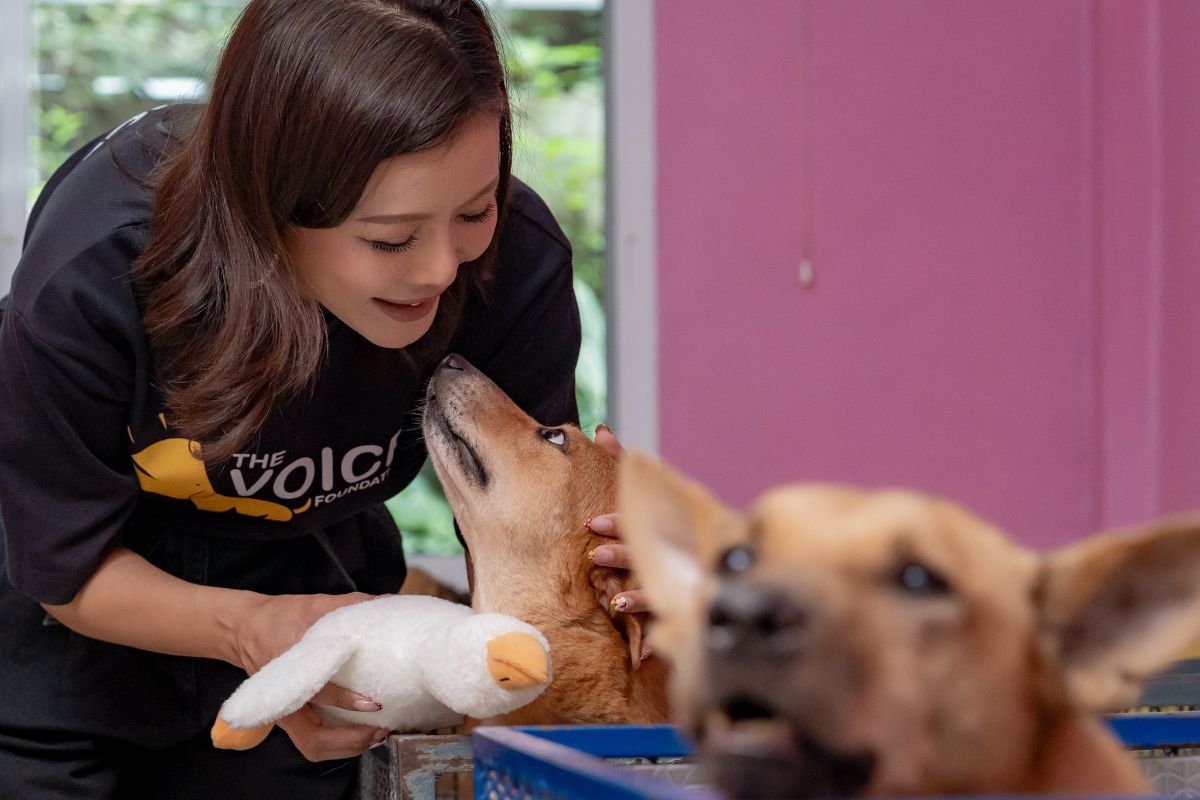
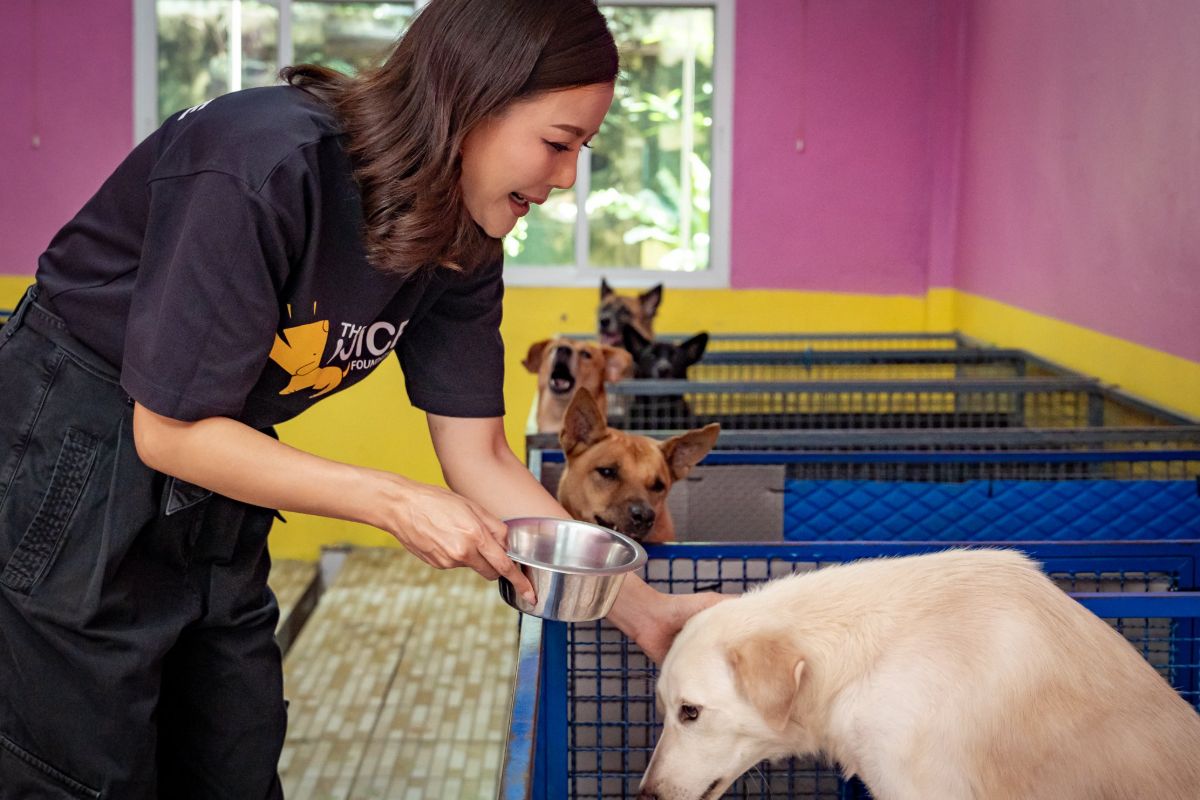
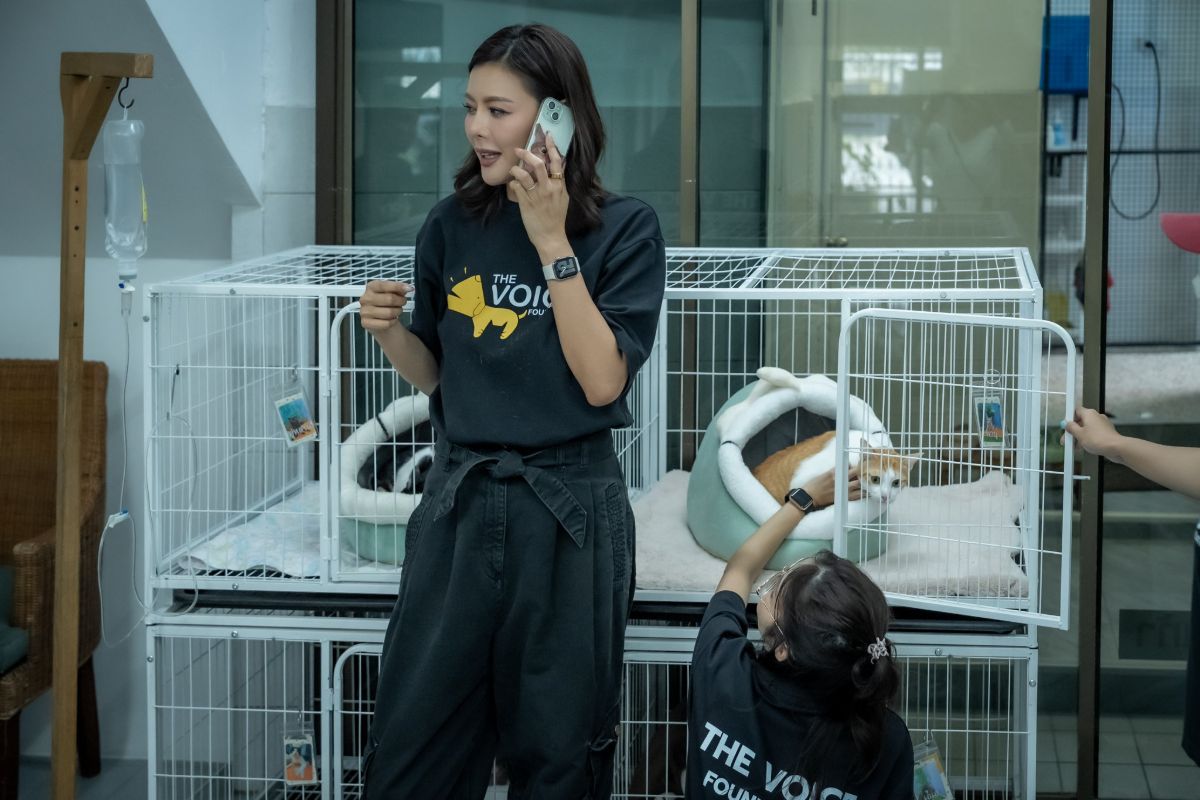
Inside, the ward is painted pink and yellow, and it is quieter than you would expect for a room with this many dogs in it. Heads lift from the low pens when Kae walks in. She moves down the row slowly, a bowl for one, a brush for the next, a hand left resting on an old white dog’s side for longer than the task needs. Between the pens, the work goes on around her: vets on rounds, a colleague tending to a patient, Kae stepping aside to take a call about the next case.
“My role is still very hands-on. In a normal week, I might be at shelters, veterinary hospitals, meeting with vets and our rescue team, following up on emergency cases, working on adoptions, fundraising, or raising public awareness.”
“And even when I’m not physically at a shelter or hospital, I’m constantly checking in — speaking with vets, following up on cases, and making decisions together with my team.”
04
Love alone is not enough
The pushback, in the early years, came in one sentence. She heard it constantly.
Why spend so much effort helping animals when there are people who need help too?
“I never believed compassion had to be a competition. Caring for animals does not mean caring less about people. In fact, the way a society treats its most vulnerable lives often reflects the kind of society we are creating for everyone.”
There was skepticism about whether attitudes could change, whether legislation was possible, whether animal welfare could ever be a serious public issue in Thailand.
“Change was slow, but every person who began thinking differently made it worthwhile.”
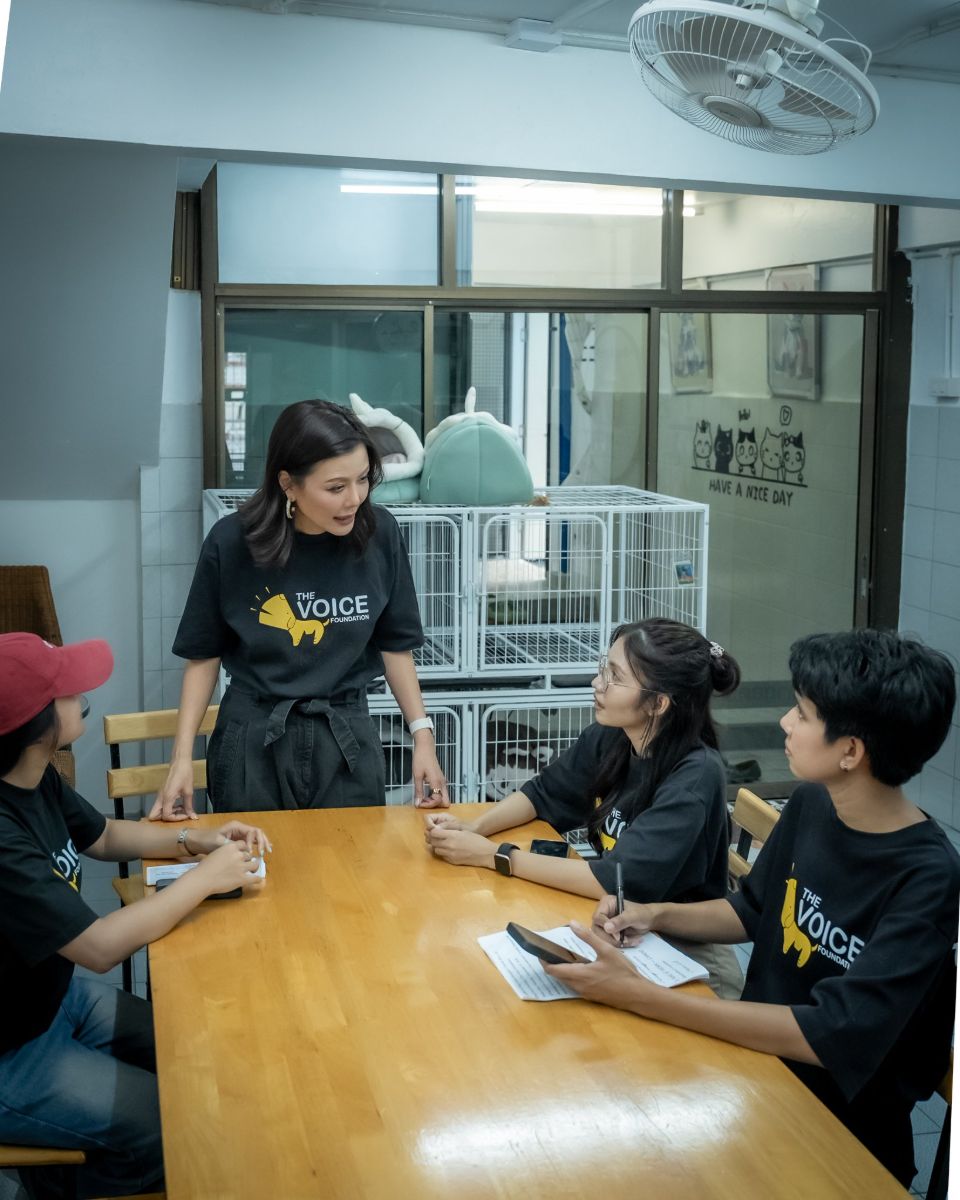
Her biggest fear was never whether the foundation would succeed. It was whether it could last.
“Rescue creates responsibility. Medical bills continue. Shelters fill up. Some animals wait years for a home. There are cases you cannot forget and outcomes you cannot control.”
“I learned very quickly that love alone is not enough. An animal welfare organization also needs discipline, sustainability, good management and people who are willing to stay for the long journey.”
“I learned very quickly that love alone is not enough.”
05
Sixty thousand voices
In 2014, Kae and members of her activist team went to Parliament to hand over a petition. It carried around 60,000 signatures from people across Thailand who wanted animals protected under the law.
“Each signature meant that another person believed animals deserved protection under the law. Standing there, I felt that the voices of thousands of people — and of countless animals who could never stand there themselves — had finally reached a place where change could happen.”
What happened next is the part she still talks about. The proposed Animal Protection Act was taken up for consideration as an urgent agenda item.
Later that year, Thailand passed its first Animal Cruelty Prevention Act.
Kae is careful about how this is told. “The law was the result of the efforts of many people, organizations, advocates and policymakers, so I would never say The Voice Foundation achieved it alone. Our role was to help mobilize public awareness and demonstrate that Thai society wanted stronger protection for animals.”
The achievement, for her, was never the foundation’s name being attached to anything. “It was seeing animal welfare finally recognized as something worthy of legal protection in Thailand.”
06
Poppy
Ask Kae about one animal she still thinks about and she does not reach for a rescue story. She reaches for her own dog.
Poppy was a Maltese. She lived with Kae for many years and died at thirteen. Toward the end she had heart disease, and caring for her became part of the daily routine, and the nightly one.
“I would give her medication, watch her breathing, and sometimes wake up in the middle of the night just to make sure she was comfortable.”
“Losing her was incredibly painful, but she taught me that love is often found in those very small moments. She also reminded me why every life deserves dignity, care, and love right until the very end.”
“I still think about her all the time.”
07
We know how to live well together
Every HUMANS feature asks the same question: what does dog-friendly mean to you? Kae’s answer widens the frame further than anyone we have asked so far.
“To me, dog-friendly means much more than allowing dogs inside a café or shopping mall. It means creating a city where humans and animals can coexist responsibly — where there are safe public spaces, responsible pet guardians, access to veterinary care, proper waste management, sterilization, identification, education and respect for people who may not be comfortable around dogs as well.”
That last clause is the one that matters. A dog-friendly city, in her telling, is not one where dogs are welcome everywhere. It is one where the people who live with dogs have earned that welcome.
“It is not simply ‘dogs are welcome.’ It is ‘we know how to live well together.’”
“It is not simply ‘dogs are welcome.’ It is ‘we know how to live well together.’”
She wishes owners understood that dog-friendly spaces only work when they hold up their end. “Loving your dog means understanding that not everyone has to love your dog in the same way you do. We need to use leashes where appropriate, clean up after them, understand their behavior, respect other animals and people, and never force interactions.”
For Bangkok’s future, she hopes for more green space, more walking areas, better transport options, pet-friendly housing, and regulations designed around coexistence rather than against it. But she puts the culture before the infrastructure.
“I hope Bangkok becomes not simply more dog-friendly, but more responsibly dog-friendly.”
08
Eight dogs
Over her life, Kae has shared her home with eight dogs, and every one of their names begins with P. Pungpond, Pookpui, Pooppup, PomPom, Pepper, Por Pia, Poppy, and Phantom.
“Every dog has taught me something different — about love, patience, responsibility, and compassion.”
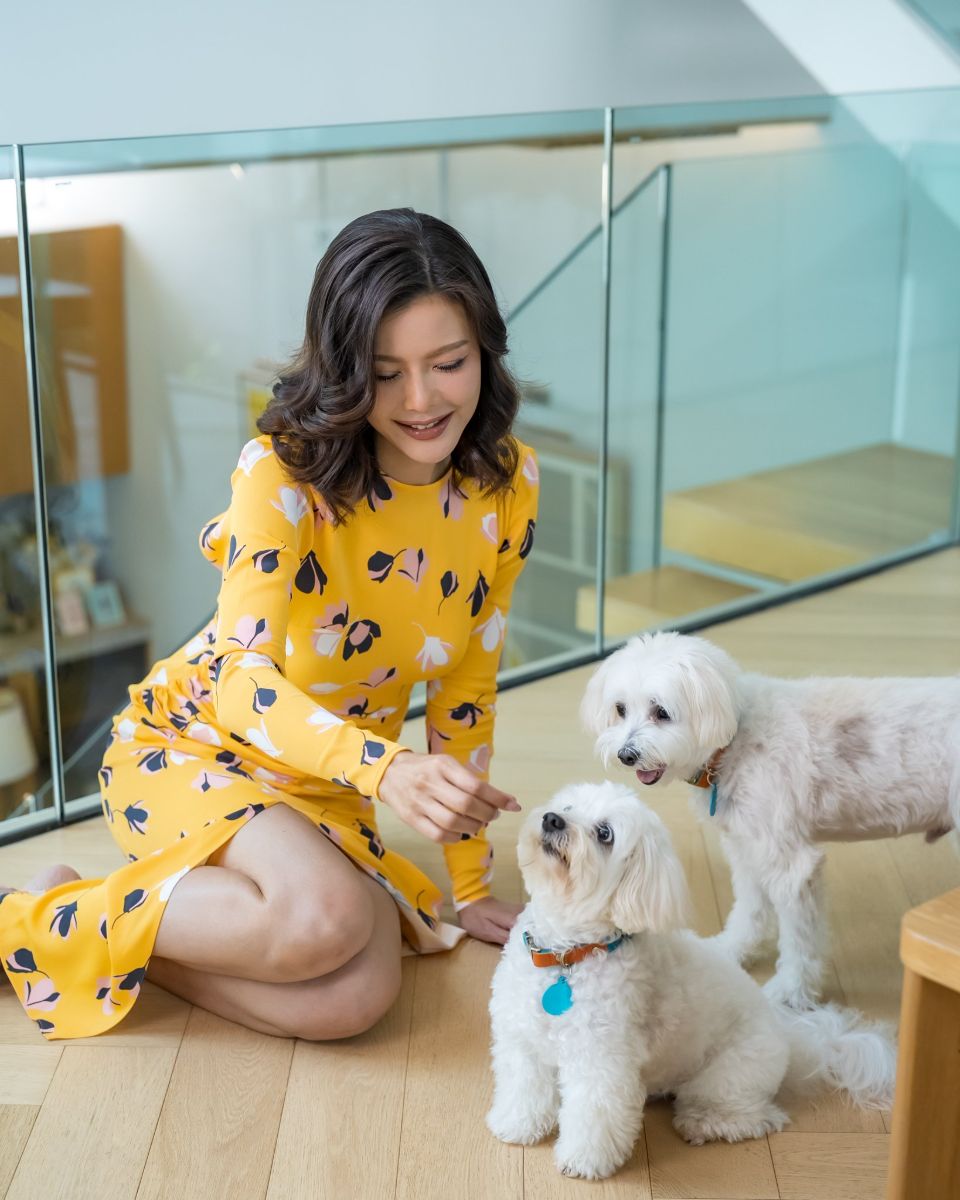
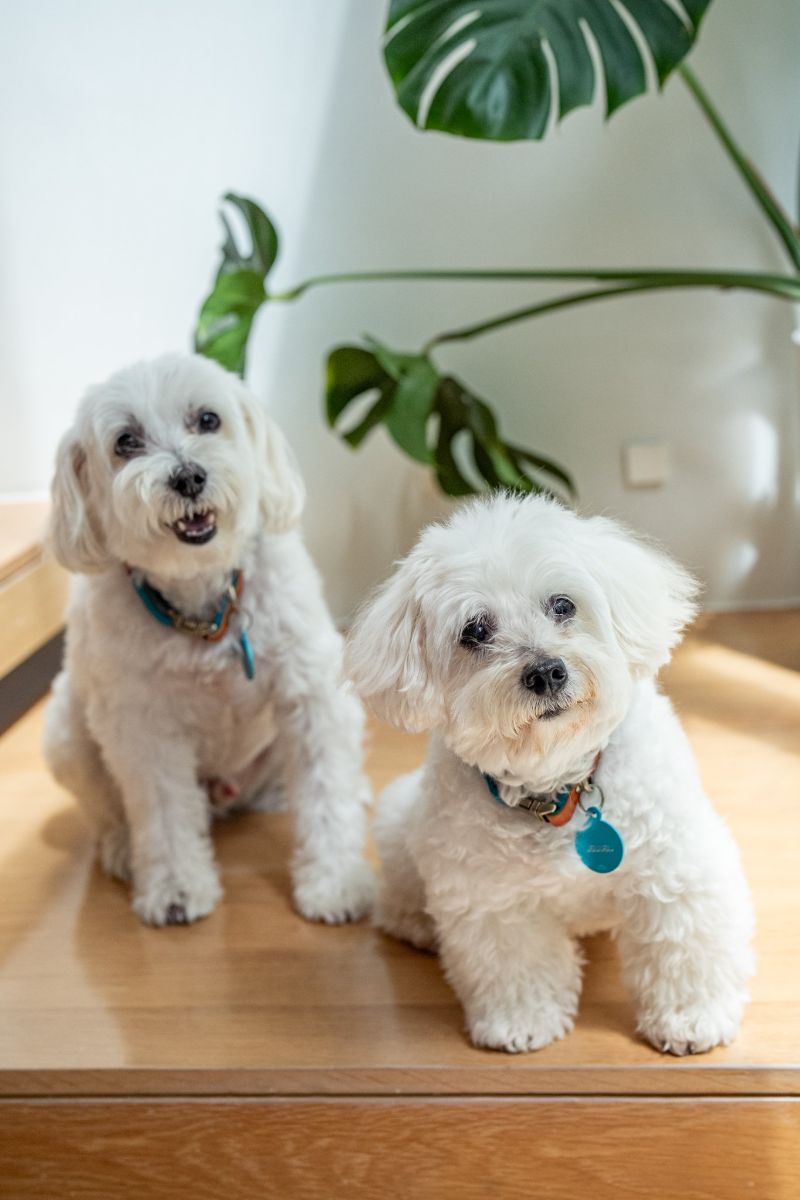
Phantom is the newest and, in one sense, the most important. He is a Thai mixed-breed, and he was adopted. “Our journey has been about getting to know each other, adjusting, and slowly building trust.” For someone who has spent fourteen years asking Bangkok to adopt rather than buy, it would have been strange to do otherwise.
Her advice for anyone thinking about a dog is practical and unromantic. Ask whether you are ready for ten, fifteen, twenty years. Don’t choose by what looks cutest. Match the dog to your life, not the other way round. Spend time with dogs first. Volunteer. Foster if you can.
“And when you are ready, please consider adoption.”
“You may think you are giving a dog a second chance, but very often they end up changing your life just as much as you change theirs.”
“Very often they end up changing your life just as much as you change theirs.”
09
Every life matters
For anyone who wants to help but doesn’t know where to begin, Kae’s answer is the same one she gives herself.
“You don’t have to start a foundation and you don’t have to rescue a hundred animals. Start with one thing you can do consistently.”
Volunteer a day. Foster one dog. Share an adoption post. Sponsor a sterilization. Speak up when you see cruelty. Teach a child to be kind to animals.
“Animal welfare is not built only by big organizations. It is built by thousands of ordinary people choosing to care. Small actions, repeated by many people, become a movement.”
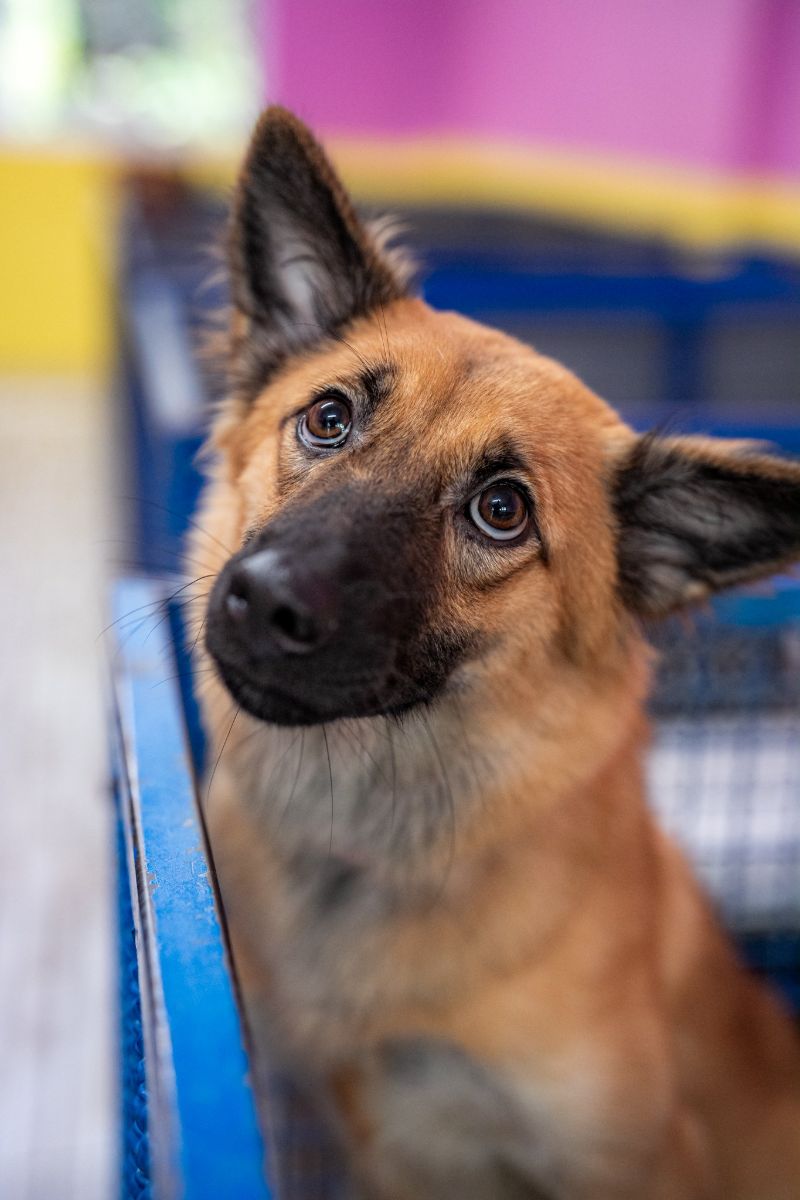
Fourteen years in, she says the foundation has made her softer and stronger at the same time.
“Animal welfare has taught me that you cannot save everyone, but that is never a reason to stop saving the one standing in front of you.”
Her ambition now is that the foundation should, eventually, have less to do.
“We may never be able to rescue every animal ourselves, but we can create a world where fewer animals need rescuing.”
Out in the courtyard, the dog in the steel cart is back under the sign after his run, tongue out, a staff member crouched at his straps checking the fit.
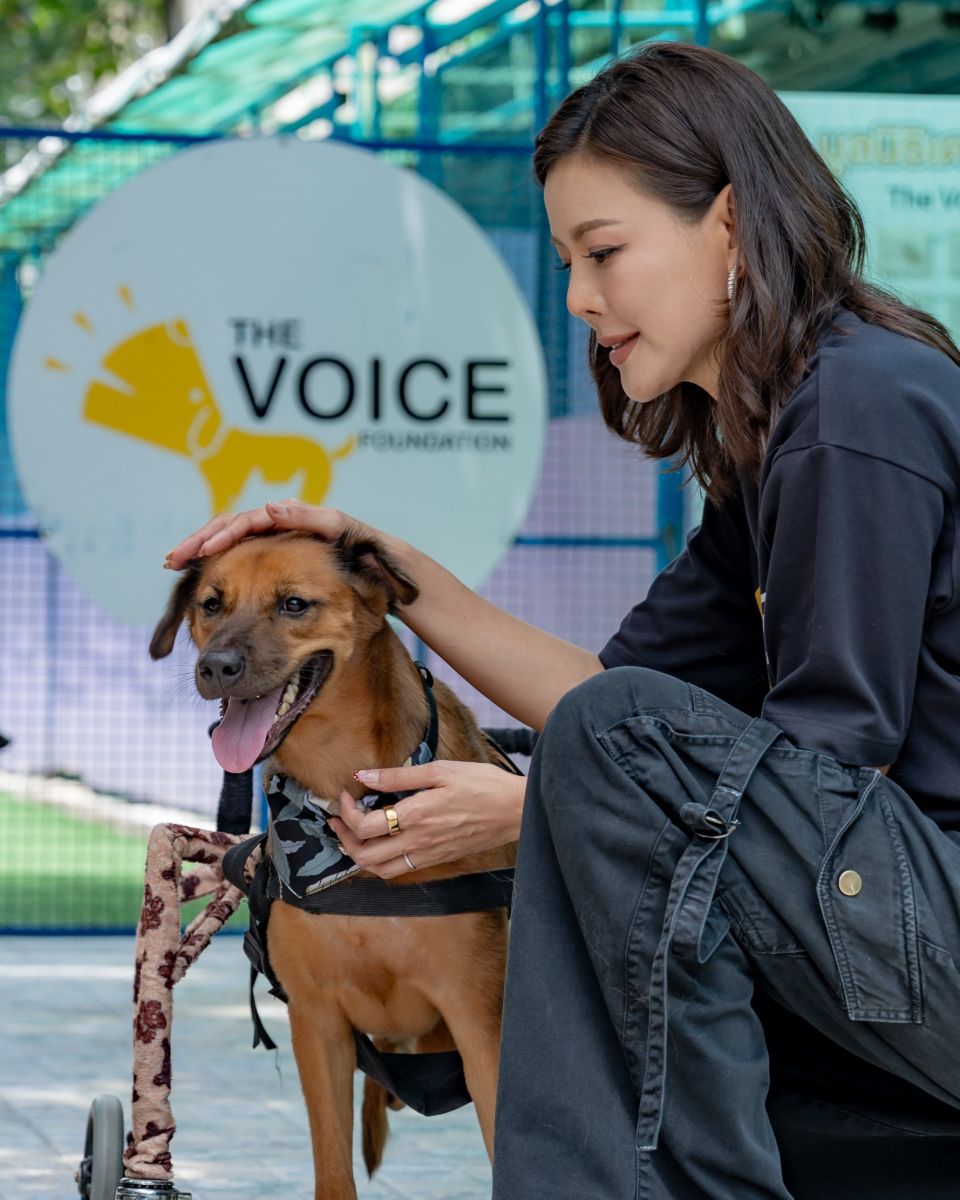
Every life matters. It is on the T-shirt, on the sign, on the wall. Spend enough time here and it stops reading like a slogan.
 Instagram
@kaechollada
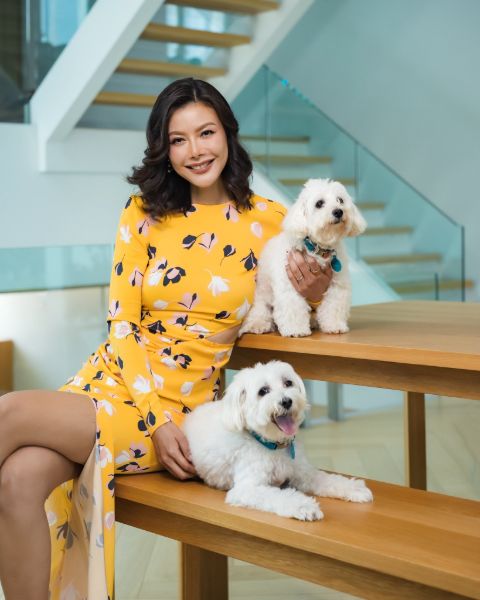
Kae Chollada, founder and director of The Voice Foundation.
Instagram
@kaechollada
Kae Chollada, founder and director of The Voice Foundation.
 Instagram · Thai
@thevoicefoundation
Rescue, treatment, adoption and advocacy for animals across Thailand.
Instagram · English
@thevoicefoundation.eng
The Voice Foundation’s English-language account.
Instagram · Thai
@thevoicefoundation
Rescue, treatment, adoption and advocacy for animals across Thailand.
Instagram · English
@thevoicefoundation.eng
The Voice Foundation’s English-language account.
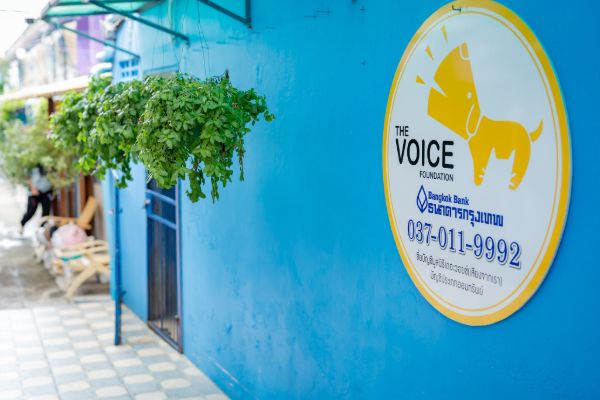
The Voice Foundation (มูลนิธิเดอะวอยซ์ เสียงจากเรา) rescues, treats, rehomes and advocates for animals across Thailand. Find them on Instagram at @thevoicefoundation and @thevoicefoundation.eng, or at thevoicefoundation.org.
Photography courtesy of The Voice Foundation.